Source Fish Farming Galvanized Water Tank for Storage, Aquaculture, Irrigation
Find 30 options for Fish Farming Galvanized Water Tank designed for durable water storage and aquaculture applications. Buyers can compare custom sizes, materials like stainless steel or PVC, and certifications including CE and SGS to select the right solution.
Key considerations
Products List


Comes with Lining and Lid Supports Customization Fish Farming Water Tank
$2000.00 - $3000.00
MOQ: 1 Pieces


Large Capacity Support for Customized Fish and Shrimp Farming Water Tanks
$2000.00 - $3000.00
MOQ: 1 Pieces


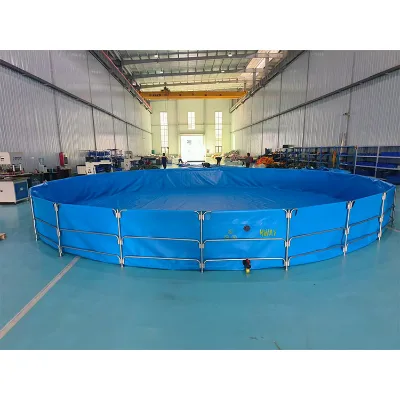
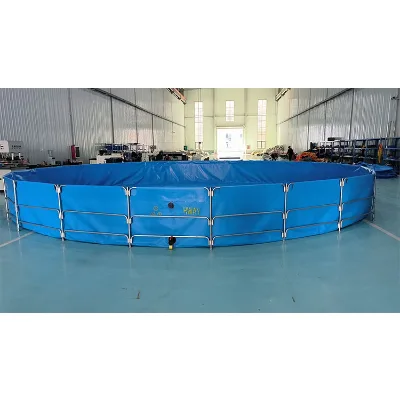


Fish Pond Farming Tank PVC Geomembrane Fish Tanks Farm Aquaculture Large
$110.00 - $115.00
MOQ: 10 Pieces


Customized Galvanized Corrugated Water Tank Fish Farming Round Tank
$700.00 - $1500.00
MOQ: 1 Cubic Meter/Cubic Meters


Comprehensive Sourcing Guide
Sourcing Guide for Fish Farming Galvanized Water Tanks
Selecting the right water containment infrastructure is a critical decision for any aquaculture operation. The core keyword "Fish Farming Galvanized Water Tank" points to a specific class of durable, corrosion-resistant storage solutions designed to withstand the demanding environment of aquatic farming. These systems are not merely passive containers; they are engineered assets that influence water quality, operational efficiency, and long-term capital expenditure. This guide synthesizes available product attributes and industry standards to provide a disciplined framework for procurement professionals. Buyers must navigate a landscape where customization, material integrity, and regulatory compliance intersect to ensure the selected tank meets the specific biological and logistical needs of their facility.
Technical Specifications and Material Integrity
The foundation of a reliable fish farming tank lies in its material composition and structural design. In the current market, galvanized steel is a primary choice for structural frames due to its strength and resistance to rust, particularly when combined with protective liners. The observed product data indicates that frames are constructed from metal, often specifically galvanized sheet metal, which provides the necessary rigidity for large-scale storage. The structural integrity is further enhanced by the use of food-grade tarpaulin or PVC liners. These liners are essential for preventing water leakage and ensuring that the water remains free from metallic contamination that could harm fish stocks.
Dimensions are rarely one-size-fits-all in aquaculture. The market offers significant flexibility in sizing, with observed specifications ranging from a diameter of 1.91 meters up to 30 meters. Capacity is equally variable, spanning from 6.6 cubic meters to as much as 1300 cubic meters. This wide range allows buyers to scale their operations from small hatcheries to large commercial farms. The thickness of the materials is a critical technical parameter; observed data suggests a range of 1.0mm to 1.5mm for the surface coating or liner, which directly impacts durability. Furthermore, the formation of the tank surface often involves a PVC coating, which adds an extra layer of protection against UV radiation and chemical degradation.
| Feature | Observed Specification Range | Procurement Verification Point |
|---|---|---|
| Frame Material | Metal (Galvanized Sheet) | Verify galvanization thickness and coating uniformity. |
| Liner Material | Food-Grade Tarpaulin or PVC | Confirm food-grade certification and chemical resistance. |
| Diameter | 1.91m - 30m | Ensure structural support matches the selected diameter. |
| Capacity | 6.6m³ - 1300m³ | Validate volume calculations against farm water needs. |
| Thickness | 1.0mm - 1.5mm | Request mill test reports for material thickness consistency. |
| Surface Formation | PVC Coated on Surface | Check for anti-UV properties and coating adhesion. |
Compliance and Certification Standards
In the B2B procurement of aquaculture equipment, compliance with international standards is non-negotiable. Buyers must verify that suppliers adhere to recognized safety and quality benchmarks. The available data highlights several specific certifications and standards that are relevant to this sector. Products are frequently associated with CE certification, indicating conformity with health, safety, and environmental protection standards for products sold within the European Economic Area. Additionally, standards such as SGS, COC, UL, and EN14960 are cited, suggesting that the manufacturing processes and final products undergo rigorous third-party testing.
It is important to distinguish between observed certifications and general industry expectations. While the provided context explicitly lists CE, SGS, and EN14960, buyers should not assume all products automatically possess these without verification. The procurement process must include a request for valid, current certificates for the specific batch or model being purchased. Furthermore, the standard for the product itself may be customizable, meaning the supplier might align with specific regional or client-defined standards rather than a single universal norm. Buyers should explicitly ask for the "prod_standard" documentation to ensure the tank meets the regulatory requirements of their local jurisdiction, particularly regarding food safety and structural integrity.
Cost Drivers and Pricing Dynamics
Understanding the cost structure of galvanized water tanks is essential for budgeting and ROI analysis. The observed price range in the market is extremely broad, spanning from 7 USD to 50,000 USD. This variance is not indicative of quality differences alone but rather reflects the massive differences in scale, customization, and material specifications. A small, standard-sized unit will naturally cost significantly less than a 1300 cubic meter custom-engineered system.
Several factors drive the final price. First, the customization level is a primary cost driver. The "prod_prop.Customization" attribute is marked as available, meaning that bespoke designs, specific dimensions, and unique configurations will incur higher costs than off-the-shelf models. Second, the choice of optional configurations adds to the base price. Buyers can select from options such as geotextile linings, PVC lids, galvanized sheet lids, or integrated drainage systems. Each of these additions increases material and labor costs. Third, the origin of the product, identified as Shandong, China, influences logistics and shipping costs, which are often separate from the unit price. Finally, the warranty terms, observed as 12 months or 1 year after receiving goods, should be factored into the total cost of ownership, as extended warranties or premium service packages may carry a premium.
Typical Applications and Operational Use Cases
The versatility of galvanized water tanks makes them suitable for a wide array of aquaculture applications. The primary usage identified is for "Storage Water," which encompasses holding water for fish farming, breeding, and treatment processes. The specific keywords associated with these products, such as "Fish Farm Tank," "Large Capacity Tanks," and "Corrugated Water Tank," highlight their intended use in commercial and industrial settings.
The installation type is observed as "Sitting Type," which implies a ground-level or foundation-based installation rather than a suspended or elevated system. This is typical for large capacity tanks where stability is paramount. The tanks are designed to be durable, with an observed lifespan of over 8 years, making them suitable for long-term agricultural investments. The inclusion of optional drainage systems suggests these tanks can be integrated into complex water circulation and management setups, allowing for efficient water exchange and waste removal. Whether used for holding fry, growing out fish, or as part of a recirculating aquaculture system (RAS), the galvanized structure provides the necessary containment while the liner ensures water quality.
Supplier Evaluation and Origin Verification
When evaluating potential suppliers, buyers must look beyond the product listing and assess the manufacturer's capabilities and location. The observed data points to a specific origin: Shandong, China. This region is known for its manufacturing capabilities, but buyers should verify the specific factory's capacity and history. The brand name "Muhe" is mentioned in the context, but procurement should not rely solely on brand recognition. Instead, focus on the supplier's ability to deliver the "prod_model" specifications, such as the MH or FT-048-1 models, and their track record with similar large-scale projects.
Key evaluation criteria include the supplier's customization capabilities, as the "prod_prop.Customization" attribute is a major differentiator. A capable supplier should be able to accommodate custom designs for size, shape, and configuration. Additionally, the packaging method, observed as "Pallet, Wooden Carton" or "Metal Pallet," is a critical indicator of the supplier's attention to detail during shipping. Poor packaging can lead to damage during transit, especially for large, heavy tanks. Buyers should also inquire about the "Assembled/Unassembled" option, as this affects on-site labor costs and installation time. A supplier that offers flexible assembly options demonstrates a deeper understanding of the client's logistical constraints.
Quality Control and Long-Term Procurement Considerations
Ensuring the long-term viability of the water tank requires a robust quality control (QC) strategy. The observed "Special Process" attributes, including "Anti UV" and fire ratings like "Fr M1, M2, B1, B2," indicate that the materials are treated for environmental resistance and safety. However, these claims must be validated through independent testing. Buyers should request test reports that confirm the anti-UV properties and fire resistance ratings, as these are critical for outdoor installations where the tank is exposed to sunlight and potential fire hazards.
The warranty period is a key metric for quality assurance. The observed warranty of 12 months or 1 year after receiving goods sets a baseline expectation. Buyers should negotiate terms that extend beyond this minimum if the supplier is confident in their product's durability, given the observed lifespan of over 8 years. The delivery time, observed as 3 weeks, is another logistical factor to consider. In a global supply chain, lead times can fluctuate, so buyers should build buffer time into their project schedules. Finally, the "Optional Configuration" list, which includes items like geotextile linings and drainage systems, offers opportunities to enhance the system's performance. Procuring these high-quality add-ons upfront can prevent costly retrofits later, ensuring the tank system is optimized for the specific needs of the fish farm from day one.
FAQs
What materials are used for the tank frame and liner?
The frame is constructed from metal, often galvanized sheet, while the liner uses food-grade tarpaulin or PVC. This combination ensures structural rigidity and prevents water contamination for fish health.
Can the tank size be customized for specific farm needs?
Yes, customization is available with diameters ranging from 1.91 meters to 30 meters and capacities up to 1300 cubic meters. Buyers can select specific dimensions to match their facility requirements.
What certifications are typically associated with these tanks?
Products often carry CE, SGS, COC, UL, and EN14960 certifications. Buyers should verify current certificates for the specific batch to ensure compliance with regional safety and quality standards.
How long is the warranty period after delivery?
The standard warranty is 12 months or 1 year after receiving goods. This coverage protects against manufacturing defects, though the observed product lifespan exceeds 8 years.
What is the typical lead time for delivery?
The observed delivery time is 3 weeks from order confirmation. This lead time applies to standard configurations, while complex custom designs may require additional processing time.
Are optional configurations like drainage systems available?
Yes, optional configurations include drainage systems, PVC lids, and galvanized sheet lids. These add-ons allow for customized water management and enhanced operational efficiency on the farm.